Need Professional Hoarding Cleanup in Houston?
What Is Animal Hoarding?
Animal hoarding is a recognized form of hoarding disorder where an individual accumulates a large number of animals without providing adequate care, nutrition, sanitation, or veterinary treatment. The condition affects an estimated 250,000 animals each year across the United States, and the Houston metropolitan area sees its share of these cases due to the region’s size and climate.
Unlike general clutter hoarding, animal hoarding introduces biological hazards that make cleanup significantly more dangerous and complex. Homes affected by animal hoarding often contain accumulated pet waste, decomposing organic matter, and airborne pathogens that pose serious risks to anyone who enters without proper protection.
Health Risks Associated With Animal Hoarding Environments
The health hazards present in an animal hoarding home go far beyond unpleasant odors. Understanding these risks is essential for anyone considering entering or cleaning such a property.
Airborne Pathogens and Respiratory Dangers
Accumulated animal waste produces ammonia gas, which at high concentrations can cause severe respiratory damage. In enclosed spaces where waste has built up over months or years, ammonia levels can reach concentrations that cause chemical burns to the lungs, eyes, and nasal passages. Dried fecal matter also becomes airite particulate that carries bacteria and parasites when disturbed.
Zoonotic Diseases
Animal hoarding environments can harbor numerous diseases transmissible from animals to humans. These include toxoplasmosis from cat feces, leptospirosis from rodent urine, psittacosis from bird droppings, and various parasitic infections. Houston’s warm, humid climate accelerates the growth of bacteria and mold in these environments, compounding the biological risks.
Structural Contamination
Urine saturation over extended periods penetrates beyond surface materials into subfloors, wall framing, and concrete foundations. This deep contamination creates ongoing health risks even after surface cleaning and makes remediation considerably more involved than standard cleaning projects.
The Specialized Cleanup Process
Animal hoarding cleanup requires a systematic approach that addresses contamination at every level of the structure. This is not a job for standard cleaning services or general junk removal companies.
Initial Assessment and Air Quality Testing
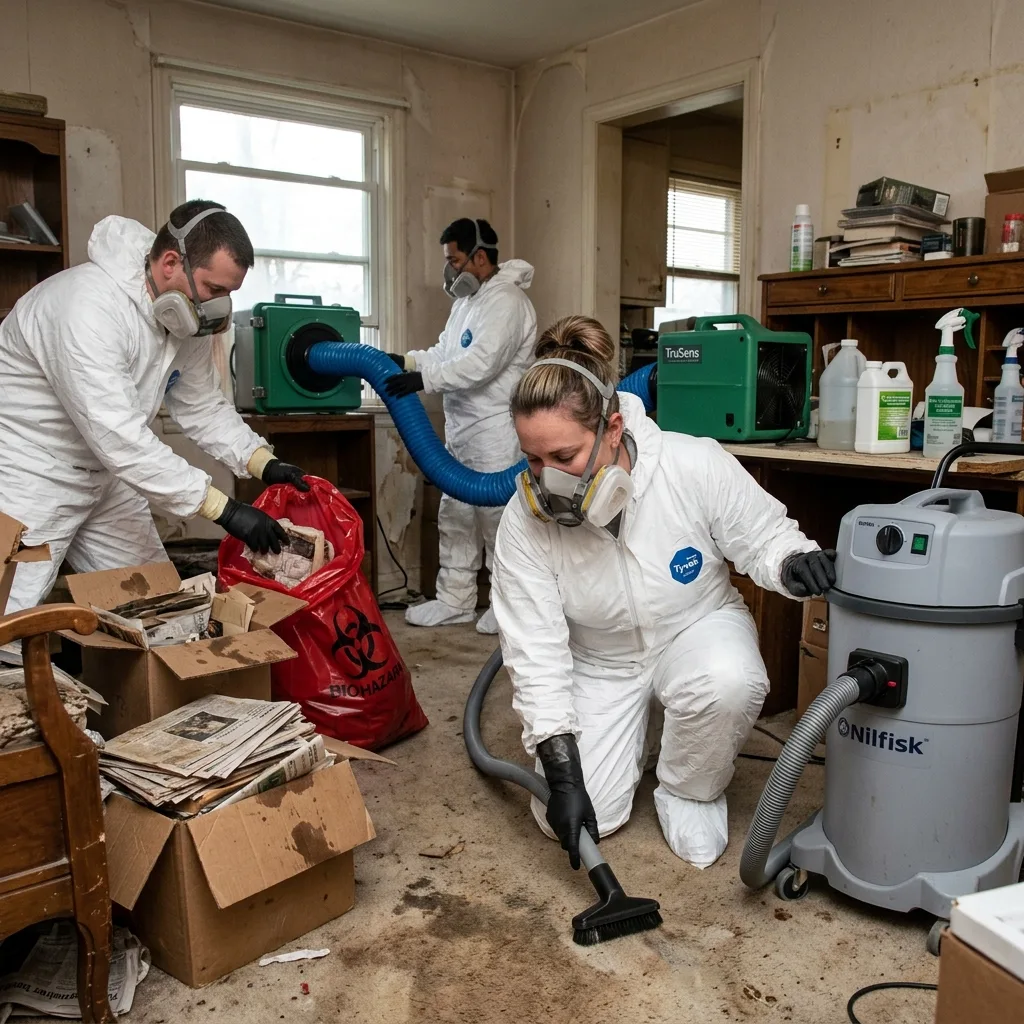
Before any work begins, professionals conduct a thorough assessment of the property. This includes evaluating structural integrity, testing air quality for ammonia and other harmful gases, and identifying areas of heaviest contamination. In severe cases, the home may need to be ventilated with industrial air movers before workers can safely enter.
Personal Protective Equipment Requirements
Workers entering an animal hoarding environment must wear appropriate PPE at all times. This typically includes full-face respirators with organic vapor cartridges rated for ammonia exposure, chemical-resistant coveralls, nitrile gloves, and boot covers. In extreme cases, supplied-air respirators may be necessary when ammonia concentrations exceed safe levels for cartridge-style respirators.
OSHA standards require that employers assess workplace hazards and provide appropriate respiratory protection. For animal hoarding environments, this often means N100 or P100 particulate filters combined with organic vapor cartridges to address both particulate and gas-phase hazards simultaneously.
Waste Removal and Sorting
The removal phase involves carefully extracting all contaminated materials from the home. This includes animal waste, soiled belongings, damaged flooring, contaminated insulation, and any materials that cannot be effectively sanitized. Workers sort materials for proper disposal, as animal waste and contaminated items often require handling as regulated waste rather than standard municipal solid waste.
Deep Cleaning and Sanitization
After contaminated materials are removed, every remaining surface undergoes thorough cleaning and sanitization. Enzymatic cleaners are used to break down organic compounds in urine and feces at the molecular level. These specialized products are far more effective than standard household cleaners because they target the specific proteins and bacteria found in animal waste.
Odor Treatment and Remediation
Odor elimination in animal hoarding cases requires more than masking agents or surface treatments. Professional remediation typically involves hydroxyl generators or ozone treatment to neutralize odor-causing molecules throughout the structure. Thermal fogging may also be used to reach odor particles embedded in porous materials.
In Houston’s humid climate, odor remediation can be particularly challenging because moisture in the air and in building materials holds onto odor compounds. Dehumidification is often an essential part of the treatment process, bringing interior humidity levels down before and during odor treatment to achieve lasting results.
Structural Repairs and Restoration
In many animal hoarding cases, contamination has penetrated so deeply that building materials must be replaced rather than cleaned. Subfloor replacement, drywall removal, and even concrete sealing or replacement may be necessary. The goal is to return the home to a safe, habitable condition free from residual contamination.
Houston-Area Animal Hoarding Situations
The Greater Houston area has seen numerous animal hoarding cases that highlight the severity of this issue. Harris County, with its sprawling suburban and rural areas, occasionally encounters properties housing dozens or even hundreds of animals in unsafe conditions. Local animal control agencies, including the Houston SPCA and Harris County Animal Shelter, frequently respond to these situations and work alongside cleanup professionals to address the aftermath.
Houston’s climate plays a role in the severity of these cases. High heat and humidity accelerate decomposition and bacterial growth, meaning that animal waste accumulation becomes hazardous more quickly than it would in cooler, drier regions. Properties that might remain marginally manageable in other climates can become severely contaminated in a matter of months in the Houston area.
Why Professional Cleanup Is Essential
Attempting to clean an animal hoarding home without professional training and equipment is genuinely dangerous. Beyond the immediate health risks from ammonia exposure and biological hazards, improper cleaning can actually make the situation worse by disturbing contaminated materials and spreading pathogens throughout the home.
Proper Disposal Requirements
Animal waste and contaminated materials from hoarding situations cannot simply be placed in regular trash collection. Depending on the volume and type of waste, disposal may need to comply with local and state regulations regarding biohazardous materials. Professional cleanup crews understand these requirements and have established relationships with licensed disposal facilities.
Insurance and Liability Considerations
Many homeowner’s insurance policies have specific provisions regarding biohazard remediation. Working with a professional cleanup company that carries appropriate insurance and follows industry protocols can be important for claims processing. Documentation of the cleanup process, including before and after photographs and detailed work logs, supports both insurance claims and any necessary code compliance verification.
Supporting Someone Affected by Animal Hoarding
Animal hoarding is a complex psychological condition, and the cleanup process can be extremely distressing for the person involved. A compassionate approach that addresses both the physical environment and the emotional needs of the individual produces the best long-term outcomes.
Professional animal hoarding cleanup teams in Houston understand the sensitive nature of these situations. The goal is not just to restore the property but to do so in a way that supports the individual’s path toward healthier living conditions. This often means working at a pace that the person can handle emotionally and coordinating with mental health professionals and social services when appropriate.
Preventing Recurrence
Cleanup alone does not address the underlying hoarding behavior. Without appropriate mental health support, recurrence rates for animal hoarding are high. Connecting individuals with therapists who specialize in hoarding disorder, local support groups, and animal welfare organizations that can provide education and monitoring helps create a foundation for lasting change.
The cleanup of an animal hoarding home is a critical first step in a longer process. When done properly by trained professionals with the right equipment and a compassionate approach, it can mark the beginning of a safer and healthier chapter for everyone involved, including the animals.