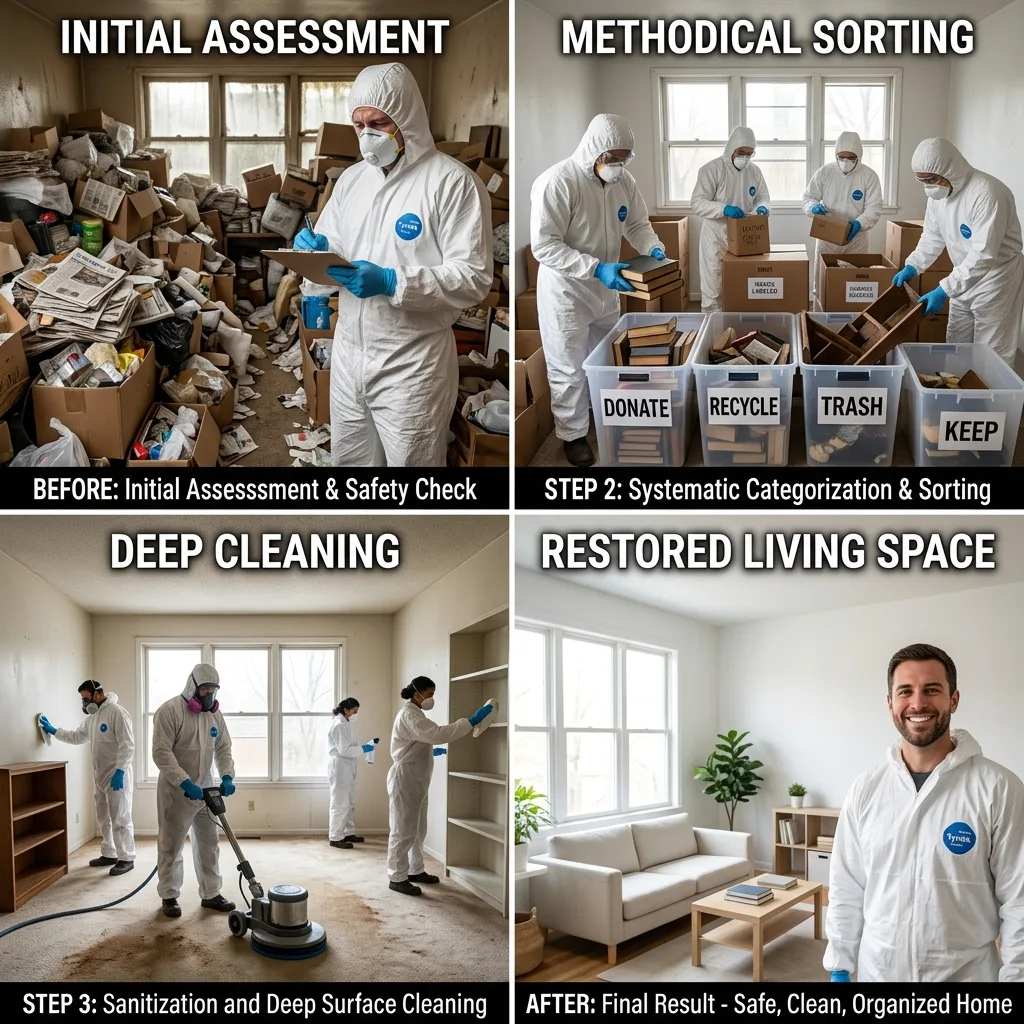
Need Professional Hoarding Cleanup in Houston?
Hoarding disorder affects an estimated 2 to 6 percent of the population, yet it remains one of the most misunderstood mental health conditions. What begins as difficulty discarding items can gradually escalate into a situation that threatens health, safety, and relationships. Recognizing the warning signs early makes a significant difference in outcomes.
Hoarding Disorder and the DSM-5
Hoarding disorder was officially recognized as a distinct mental health condition in the DSM-5 (Diagnostic and Statistical Manual of Mental Disorders, Fifth Edition) in 2013. Previously, it was classified as a subtype of obsessive-compulsive disorder, but research demonstrated that hoarding has its own unique neurological patterns and treatment approaches.
The DSM-5 defines hoarding disorder by three core criteria: persistent difficulty discarding possessions regardless of their actual value, a perceived need to save items combined with distress at the thought of discarding them, and the accumulation of possessions that congest living areas and substantially compromise their intended use.
Understanding that hoarding is a recognized clinical condition is important. It is not laziness, stubbornness, or a character flaw. It is a treatable condition that responds to appropriate intervention.
Hoarding vs. Collecting: Understanding the Difference
Before examining the warning signs, it is helpful to distinguish hoarding from collecting. Collectors acquire specific categories of items intentionally. They organize their collections, display them proudly, and experience joy from them. A stamp collector, for example, keeps stamps organized in albums and can discuss the significance of individual pieces.
Hoarding, by contrast, involves the indiscriminate accumulation of items that often have little objective value. The items are typically disorganized, piled rather than displayed, and the person may feel shame rather than pride about the accumulation. The critical distinction is that hoarding impairs daily functioning while collecting enhances life.
The 7 Warning Signs
1. Persistent Difficulty Discarding Items
The hallmark of hoarding disorder is an inability to part with possessions, even those with no practical or monetary value. This includes worn-out clothing, expired food, junk mail, broken appliances, empty containers, and old newspapers. The difficulty goes beyond ordinary attachment to belongings. The person experiences genuine emotional distress at the thought of getting rid of items, often expressing fears that they might need the item someday or that discarding it would be wasteful.
2. Living Spaces No Longer Serve Their Purpose
When clutter accumulates to the point that rooms cannot be used as intended, it signals a serious problem. Beds buried under piles of items so the person sleeps on a couch or recliner. Kitchen counters and stovetops covered so cooking becomes impossible. Bathtubs filled with storage so bathing becomes difficult. Dining tables invisible under stacks of papers and objects. When living spaces lose their function, the hoarding has moved beyond simple disorganization.
3. Distress or Impairment in Daily Functioning
Hoarding disorder causes clinically significant distress or impairment in social, occupational, or other important areas of functioning. The person may avoid having visitors because of shame about the home’s condition. They may be late for work because they cannot find necessary items. Personal hygiene may decline because bathrooms are inaccessible. Meals may become irregular because the kitchen is unusable.
4. Excessive Acquisition of New Items
Many people with hoarding disorder continue bringing new items into an already overcrowded home. This includes purchasing items on sale that are not needed, picking up free items from curbs or giveaways, keeping every piece of mail, and accumulating multiples of items they already own in excess. The acquisition continues even when there is no space for additional possessions.
5. Extreme Emotional Attachment to Objects
People with hoarding disorder often anthropomorphize objects or assign them intense emotional significance. They may feel that discarding an item is equivalent to abandoning a friend. They may believe that objects have feelings or that throwing something away is morally wrong. This emotional connection extends beyond sentimental items to mundane objects like old magazines, plastic bags, or broken tools.
6. Indecisiveness and Avoidance
Chronic indecisiveness is common in hoarding disorder. The person may be unable to decide where to put an item, so it joins a pile. They cannot decide whether something is worth keeping, so they keep everything by default. They avoid dealing with mail, paperwork, or organizational tasks entirely because the decision-making process is overwhelming. This avoidance creates a cycle where the problem continuously worsens.
7. Social Isolation and Secrecy
As the living situation deteriorates, people with hoarding disorder often withdraw from social connections. They stop inviting people over. They may refuse to allow maintenance workers or family members into the home. They become defensive or angry when anyone suggests cleaning up. This isolation can accelerate the hoarding because there are fewer social pressures to maintain living standards and fewer people available to notice the escalation.
The 5 Levels of Hoarding Severity
Mental health professionals and hoarding remediation specialists commonly use the Clutter-Hoarding Scale to assess severity. Understanding these levels helps families gauge the urgency of the situation.
Level 1: Low Risk
All doors and stairways are accessible. The home has some clutter but remains fundamentally livable. There may be light pet odor or minor housekeeping issues. At this level, the situation is manageable with behavioral therapy and organizational support.
Level 2: Moderate Risk
One room or area has impaired function. There is evidence of light pest activity. One exit may be partially blocked. Garbage cans are overflowing, and dishes are piling up. Professional organizing help combined with therapy can be effective at this stage.
Level 3: Significant Risk
One room is completely unusable. There is visible pest activity, noticeable odor, and clutter in hallways. The person may have an excessive number of pets. At least one household system like HVAC or plumbing may not be functioning properly. Professional cleanup assistance becomes important at this level.
Level 4: High Risk
Multiple rooms are unusable. Structural damage may be present. There is aged food, excessive pet waste, or hazardous materials. The person may be bathing infrequently due to bathroom inaccessibility. Professional hoarding cleanup and mental health intervention are strongly recommended.
Level 5: Severe Risk
The home is uninhabitable. There is major structural damage, fire hazards, no running water or electricity, human waste present, and severe biohazard conditions. This level requires immediate professional intervention and may involve coordination with code enforcement or Adult Protective Services.
When to Seek Help
For the Individual
If you recognize these signs in yourself, know that seeking help is a sign of strength. Hoarding disorder responds to cognitive behavioral therapy specifically designed for hoarding. A therapist who specializes in hoarding can help you develop new decision-making skills, address the underlying anxiety, and gradually reclaim your living spaces.
For Family Members
If you recognize these signs in someone you care about, approach the situation with empathy rather than criticism. Forced cleanouts without the person’s participation almost always fail because the underlying condition remains untreated. Encourage professional evaluation and support the person in seeking therapy.
Early intervention produces the best outcomes. At Levels 1 and 2, therapy combined with organizational support often resolves the situation. At Levels 3 through 5, professional cleanup becomes necessary alongside mental health treatment.
Professional Resources
Several types of professionals can help with hoarding situations. Licensed therapists specializing in hoarding disorder address the psychological component. Professional hoarding cleanup companies handle the physical remediation. Professional organizers who have hoarding-specific training can help maintain progress after cleanup. Many families find that a coordinated approach involving all three disciplines produces the most lasting results.
Moving Forward with Compassion
Hoarding disorder thrives in secrecy and shame. The most powerful step anyone can take is breaking through that isolation, whether by acknowledging the problem, reaching out for help, or gently opening a conversation with someone who is struggling. Recovery is possible, and it begins with understanding that hoarding is not a choice but a condition that responds to proper treatment.