Need Professional Hoarding Cleanup in Houston?
Discovering that an aging parent has been living in hoarding conditions is one of the most difficult experiences an adult child can face. The mix of concern, frustration, guilt, and helplessness can feel paralyzing. You want to help, but everything you try seems to make things worse. The good news is that there are approaches that work, and understanding them can make all the difference.
Why Hoarding Often Worsens with Age
Hoarding tendencies frequently intensify in older adults for several interconnected reasons. Physical decline makes it harder to clean, organize, and take out trash. Cognitive changes can impair decision-making and organizational skills. The loss of a spouse, friends, or social connections removes the social motivation to maintain a home. Retirement eliminates daily structure. Depression and anxiety, which are common in aging populations, fuel the emotional attachment to objects.
For many elderly hoarders, the items in their home represent control during a period of life when control is slipping away. Understanding this dynamic is essential before attempting any intervention.
Starting the Conversation
Choose the Right Moment
Timing matters enormously. Do not bring up the hoarding during a holiday gathering, a health crisis, or when other family members are present who might pile on. Choose a calm, private moment when you and your parent are relaxed and unhurried. The kitchen table at their home during a regular visit is often better than a formal sit-down that feels like an intervention.
Lead with Love, Not Logic
Your parent already knows the house is cluttered. Presenting logical arguments about safety hazards, property values, or health risks rarely works because hoarding is driven by emotion, not logic. Instead, express your feelings and concerns from a place of love.
Saying “I worry about you living here because I love you and I want you to be safe” opens a door. Saying “This house is a disaster and you need to clean it up” slams one shut.
Listen More Than You Speak
Your parent likely has reasons for every pile and every saved item, even if those reasons seem irrational to you. Listen to those reasons without judgment. Understanding your parent’s perspective does not mean agreeing with it, but it demonstrates respect and builds trust that will be essential throughout the process.
Avoid Ultimatums
Threatening to call the authorities, refusing to visit, or declaring that you will clean the house yourself whether they like it or not almost always backfires. These approaches trigger the shame and defensiveness that keeps hoarding entrenched. They damage the relationship you need intact to facilitate change.
Common Mistakes to Avoid
The Surprise Cleanout
This is the single most harmful approach and unfortunately the most common one. Family members wait until the elderly parent is hospitalized or away from home, then hire a crew to clear everything out. While the home may look better temporarily, the psychological damage is severe. The parent experiences it as a violation and a loss. Trust is destroyed. Depression often worsens significantly. And in most cases, the hoarding returns within months because the underlying condition was never addressed.
Doing It All Yourself
Some adult children try to gradually clean the home themselves during visits. This creates resentment, exhaustion, and family conflict. It also does not work because without the parent’s active participation and psychological treatment, the clutter returns.
Applying Pressure Through Other Family Members
Recruiting siblings, grandchildren, or other relatives to confront the parent creates a feeling of ambush. Each family member should be informed about the situation, but interventions work best when led by the one person the parent trusts most.
Involving Professional Help
Therapists Specializing in Hoarding
Cognitive behavioral therapy adapted for hoarding disorder is the most effective treatment available. A therapist who specializes in hoarding will work with your parent on the decision-making difficulties, emotional attachments, and anxiety that drive the behavior. Finding a therapist experienced with older adults adds another layer of effectiveness.
In the Houston area, the International OCD Foundation maintains a directory of hoarding-specialized therapists. Your parent’s primary care physician can also provide referrals.
Geriatric Care Managers
A geriatric care manager is a professional, usually a licensed social worker or nurse, who specializes in coordinating care for older adults. They can assess your parent’s overall situation, recommend appropriate services, mediate family disagreements, and create a care plan that addresses the hoarding alongside other health needs.
Professional Hoarding Cleanup Services
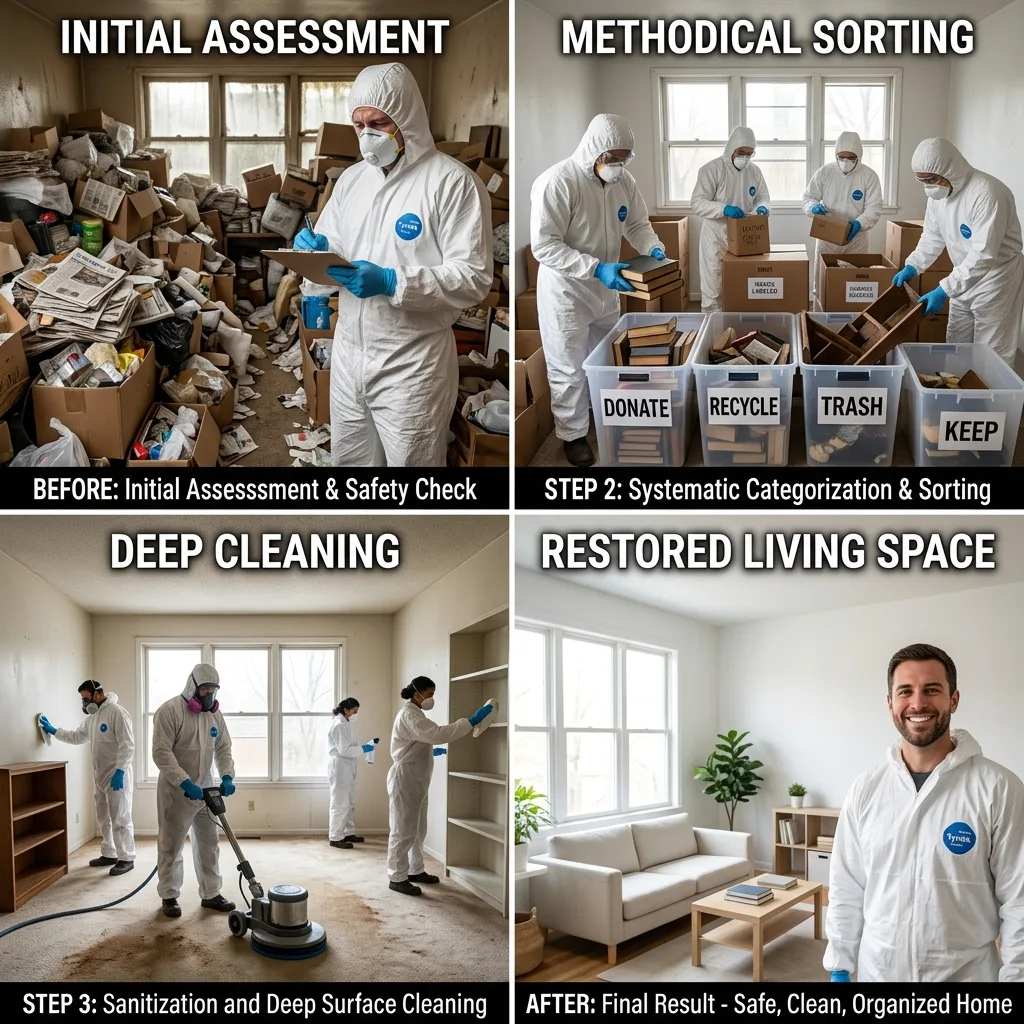
When your parent is ready for a physical cleanout, professional hoarding cleanup companies bring experience that general cleaning services lack. They understand the emotional sensitivity involved, they work at the client’s pace when possible, and they follow systematic processes for sorting items into categories. Reputable companies will include your parent in the decision-making process rather than simply hauling everything away.
Understanding Adult Protective Services in Texas
When APS Gets Involved
In Texas, Adult Protective Services investigates reports of abuse, neglect, and exploitation of adults who are elderly or have disabilities. Hoarding falls under self-neglect when the living conditions create a health or safety risk. Anyone can make a report to APS, and in Texas, certain professionals are mandatory reporters.
What an APS Investigation Looks Like
An APS caseworker will visit the home, assess the conditions, evaluate your parent’s capacity to make decisions, and determine whether the situation constitutes self-neglect. They work on a least-restrictive intervention model, meaning they attempt the most supportive and least intrusive solutions first.
APS as a Resource, Not a Threat
Many families view APS involvement as a worst-case scenario, but it can actually be a helpful resource. APS caseworkers can connect your parent with services like in-home assistance, mental health treatment, and community resources that you may not know exist. They can also provide the external authority that sometimes motivates change when family members cannot.
However, APS involvement should not be used as a threat or a manipulation tactic. If you genuinely believe your parent’s living situation poses an immediate risk to their health or safety, filing a report is the responsible thing to do.
Building a Long-Term Support Plan
Set Realistic Expectations
Hoarding disorder is a chronic condition. Even with successful treatment and cleanup, there will be setbacks. Planning for ongoing support is more realistic and more effective than expecting a one-time fix.
Establish Regular Check-Ins
After treatment begins and any cleanup is completed, regular visits help maintain progress. Weekly or biweekly visits that include casual monitoring of the home environment allow you to notice early signs of relapse without making every interaction about the hoarding.
Support Their Autonomy
Your parent is an adult with the right to make their own decisions, even imperfect ones. Unless they have been legally deemed incapacitated, they retain control over their home and belongings. Your role is to support and encourage, not to control. This boundary is important for your relationship and for your own mental health.
Address Your Own Needs
Caring for a parent with hoarding disorder takes an emotional toll. Many adult children of hoarders carry childhood trauma related to their parent’s condition. Therapy or support groups for family members of hoarders provide a space to process those feelings and develop coping strategies. You cannot pour from an empty cup.
When Safety Cannot Wait
In some situations, the hoarding creates immediate danger that requires urgent action even if your parent is not yet willing to engage in treatment. Blocked exits that prevent escape during a fire, structural collapse risks, active gas leaks, sewage backups, and severe pest infestations all constitute emergencies.
In these cases, contact local code enforcement, the fire marshal, or Adult Protective Services. Emergency intervention is not ideal, but preserving your parent’s life and safety takes priority. Even in emergency situations, approach your parent with as much compassion and transparency as possible.
There Is No Perfect Approach
Every hoarding situation is unique, and every family dynamic is different. There is no script that guarantees success. What works consistently is patience, compassion, professional guidance, and the understanding that progress is measured in months and years rather than days and weeks. Your parent did not develop this condition overnight, and they will not overcome it overnight. But with the right support, meaningful improvement is possible at any age.