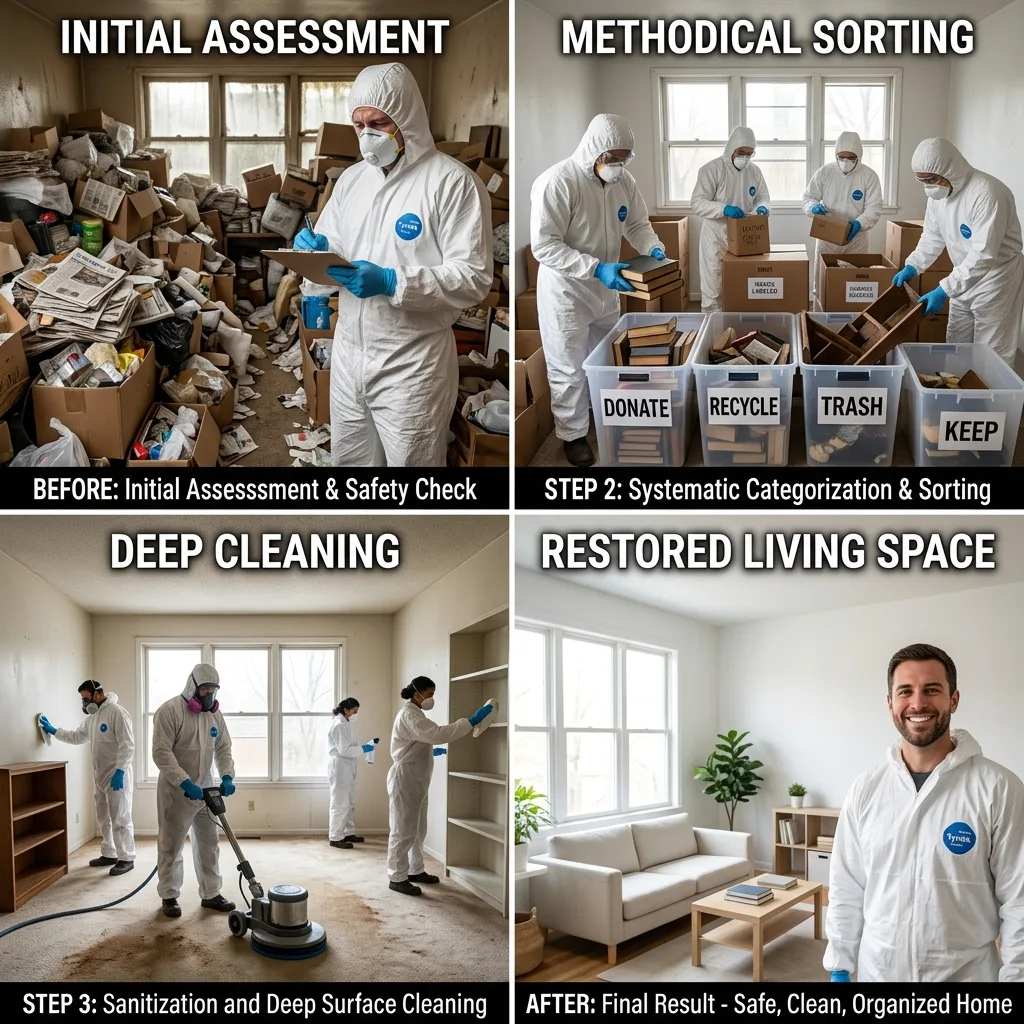
Need Professional Hoarding Cleanup in Houston?
The decision to pursue a professional hoarding cleanup is a major step. Whether you are the homeowner, a family member, or a property manager, knowing what the process involves helps reduce anxiety and allows you to prepare appropriately. Professional hoarding cleanup follows a structured approach that balances efficiency with sensitivity.
Phase 1: Initial Assessment
The First Contact
The process begins with a phone call or inquiry. A reputable hoarding cleanup company will ask general questions about the property size, the approximate severity of the situation, any known hazards, and who will be involved in the decision-making process. They will not pressure you into scheduling immediately and should be willing to answer your questions thoroughly.
On-Site Evaluation
The most important step before any work begins is a thorough on-site evaluation. An experienced assessor walks through the entire property to determine the scope of work. During this walkthrough, they evaluate several critical factors.
Clutter-Hoarding Scale rating: Most professionals use the Institute for Challenging Disorganization’s Clutter-Hoarding Scale, which rates conditions from Level 1 through Level 5. This standardized assessment tool examines the condition of each room across categories including structure and zoning, pets and pests, household functions, health and safety, and personal protective equipment needs. The rating directly influences the crew size, timeline, and cost estimate.
Hazard identification: The assessor looks for biohazard materials including animal waste, human waste, and decomposing organic matter. They check for structural damage such as sagging floors, water damage, and compromised stairs. They note fire hazards, blocked exits, chemical storage issues, and any evidence of mold or pest infestation.
Utility status: Working electricity, running water, and functioning HVAC affect how the cleanup proceeds. Properties without working utilities require generators, portable lighting, and water delivery.
Access planning: The assessor determines where dumpsters can be placed, which entry points the crew will use, and whether any obstacles like fencing, narrow driveways, or neighboring structures will affect logistics.
The Written Estimate
After the evaluation, you receive a detailed written estimate that breaks down the anticipated costs. This document should specify the estimated timeline, crew size, equipment needed, dumpster requirements, any specialized services like biohazard remediation or pest control, and the total projected cost. A reputable company will explain that the estimate may need adjustment as work reveals hidden conditions.
Phase 2: Preparation
Creating a Sorting Plan
Before the crew arrives, the project manager develops a sorting plan. This plan establishes the categories that items will be sorted into, typically including keep, donate, recycle, and dispose. If the homeowner or family members will participate in sorting decisions, the plan includes how they will be consulted without slowing the process to a halt.
Establishing Emotional Ground Rules
Professional hoarding cleanup teams understand the emotional weight of the work. A good company discusses expectations with the homeowner and family beforehand. This includes setting boundaries around how decisions will be made if the homeowner becomes overwhelmed, establishing break schedules, and agreeing on which areas to tackle first. Starting with less emotionally charged spaces like a garage or spare bathroom often builds momentum.
Safety Setup
On the first day, before any sorting begins, the crew establishes safety infrastructure. This includes setting up proper ventilation with industrial fans and air scrubbers, positioning dumpsters, establishing a clean staging area outside the home, and ensuring all crew members have appropriate personal protective equipment. In biohazard situations, this setup includes containment barriers to prevent cross-contamination.
Phase 3: The Sorting Process
Systematic Room-by-Room Approach
Professional crews work through the home one room at a time rather than jumping between spaces. This approach provides visible progress that motivates everyone involved and prevents the chaos of having multiple areas partially cleared.
The typical sequence begins with creating clear pathways through the home for safety. Then the crew addresses the kitchen and bathrooms first because restoring these functional spaces has the greatest immediate impact on livability. Bedrooms and living areas follow. Garages, attics, and storage areas are usually last.
The Four-Category Sort
Every item passes through a decision process. Items identified for keeping are cleaned and placed in a designated clean area. Items suitable for donation are boxed, labeled, and loaded for transport to charitable organizations. Recyclable materials are separated according to local recycling guidelines. Everything else goes into the disposal stream.
Handling Valuables and Documents
Experienced crews know to watch for important items that may be hidden in unexpected places. Cash is commonly found inside books, envelopes, and clothing pockets. Important documents like birth certificates, property deeds, and financial records may be scattered throughout the home. Jewelry and small valuables can be buried in drawers or boxes. Prescription medications need to be collected for proper evaluation. The crew uses a system to flag and set aside anything that appears valuable or important for the homeowner’s review.
Dealing with Hazardous Materials
Hoarding homes frequently contain materials that require special handling. Common hazardous finds include old paint cans, automotive fluids, expired chemicals, propane tanks, and ammunition. These materials cannot go into standard dumpsters. The cleanup company arranges proper disposal through licensed hazardous waste handlers.
Phase 4: Deep Cleaning
Surface Cleaning
Once all items have been sorted and removed, the deep cleaning begins. Every surface in the home is cleaned, including walls, ceilings, floors, windows, doors, and built-in fixtures. Years of accumulated dust, grime, and residue require industrial-strength cleaning products and equipment that goes far beyond what standard janitorial services provide.
Odor Elimination
Hoarding homes almost always have significant odor issues. Professional cleanup uses a multi-step approach to odor elimination. Surface cleaning removes the primary sources. Enzyme-based treatments break down organic compounds embedded in porous materials. Ozone generators or hydroxyl generators neutralize airborne odor molecules. In severe cases, some materials like carpet, drywall, or subfloor may need to be removed entirely because the odor has penetrated too deeply to treat.
Carpet and Flooring
Carpet in hoarding homes is frequently damaged beyond salvage and must be removed. The crew pulls up carpet and padding, then evaluates the subfloor beneath. Hardwood floors may be recoverable with professional refinishing if the damage is not too severe. Tile and vinyl are cleaned and assessed for replacement needs.
Kitchen and Bathroom Restoration
These rooms receive the most intensive cleaning because they involve plumbing fixtures, appliances, and surfaces that contact food or the body. Commercial-grade disinfection protocols are applied to every surface. Appliances are cleaned inside and out, and any that are non-functional are removed.
Phase 5: Remediation Services
Mold Remediation
If mold was identified during the assessment or discovered during cleanup, certified mold remediation follows established protocols. Affected materials are removed, the area is treated with antimicrobial agents, and the space is dried using commercial dehumidifiers and air movers. Post-remediation air quality testing confirms the mold has been successfully addressed.
Pest Treatment
When pest infestations are present, a licensed pest control operator treats the home after clutter removal. Treating before removal is ineffective because pests harbor deep within the clutter. The cleanup company typically coordinates with pest control professionals to ensure proper sequencing.
Minor Repairs
Many cleanup companies handle basic repairs identified during the process. This can include patching walls, replacing damaged fixtures, repairing doors and windows, and addressing minor plumbing issues. Major structural repairs are typically referred to licensed contractors.
Phase 6: Final Walkthrough and Handoff
Quality Inspection
The project manager conducts a detailed final walkthrough with the homeowner or family representative. Every room is inspected for cleanliness, remaining odor, and any missed items. This is the time to address any concerns before the crew demobilizes.
Documentation
Professional companies provide documentation of the completed work, including before and after photographs, an inventory of items donated or disposed of, receipts for hazardous waste disposal, and any recommendations for follow-up services. This documentation is valuable for insurance purposes, property transactions, and family records.
Maintenance Recommendations
The cleanup company should provide guidance on maintaining the home’s condition going forward. This may include referrals to therapists specializing in hoarding, recommendations for professional organizers who can provide ongoing support, and suggestions for storage solutions that help keep the home functional.
Timeline Expectations
A Level 1 or 2 hoarding cleanup may be completed in one to three days. Level 3 situations typically take three to seven days. Level 4 conditions require one to three weeks. Level 5 cleanups can take three weeks to over a month, especially when extensive remediation is involved.
These timelines assume a professional crew working standard business hours. Weather, permit requirements, and the pace of homeowner decision-making can all extend the schedule. Patience with the process produces better outcomes than rushing to finish.
Your Role in the Process
Whether you are the homeowner or a family member, your participation makes the cleanup more effective. Being available for sorting decisions, providing information about the home’s history, and maintaining open communication with the project manager all contribute to a smoother process. At the same time, trust the professionals to manage the physical work. They have the training, equipment, and experience to handle conditions that would be overwhelming for most people.