Need Professional Hoarding Cleanup in Houston?
Why Hoarding Creates Serious Fire Risks
Hoarding conditions dramatically increase the likelihood and severity of residential fires. The combination of excessive combustible materials, blocked pathways, and compromised electrical systems creates an environment where fires start more easily, spread faster, and are far more difficult to escape or extinguish. For Houston residents living in or near hoarding conditions, understanding these risks is a critical safety concern.
Fire departments across the country consistently identify hoarding as one of the most dangerous conditions they encounter during emergency responses. The sheer volume of accumulated materials in a hoarding home means that what might be a minor, easily contained fire in a typical residence can rapidly become a devastating inferno that threatens the entire structure and surrounding properties.
Blocked Exits and Escape Route Hazards
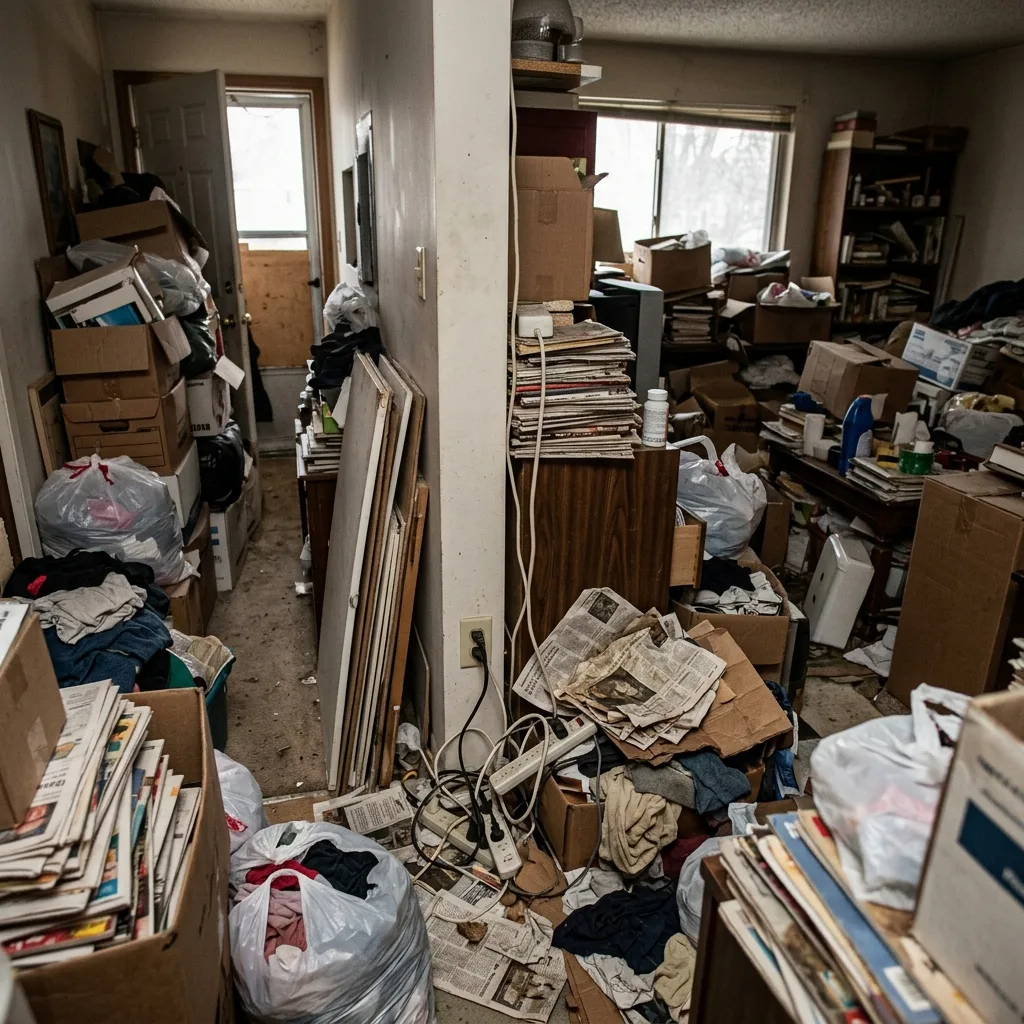
One of the most immediately life-threatening aspects of hoarding is the obstruction of exit pathways. When hallways, doorways, and windows are blocked or narrowed by accumulated items, occupants may be unable to escape quickly during a fire emergency. This is especially dangerous for elderly individuals or those with mobility limitations who may already have difficulty moving through a home.
How Blocked Exits Increase Fatality Risk
In a typical house fire, occupants have roughly two to three minutes to escape once a smoke alarm sounds. In hoarding homes, that already narrow window shrinks dramatically. Navigating through narrow pathways between stacked items takes longer, and the risk of tripping or becoming trapped increases significantly. Items stacked near doorways can shift or fall during the chaos of an emergency, completely blocking what was already a compromised exit.
Windows that serve as secondary escape routes are frequently inaccessible in hoarding situations. Items piled on windowsills, furniture pushed against walls, and curtains buried behind stacks of belongings mean that breaking a window and climbing out becomes nearly impossible. Firefighters report regularly encountering hoarding homes where every potential exit point is effectively sealed by accumulated possessions.
Impact on Emergency Responders
Blocked pathways do not just endanger residents. Firefighters attempting to enter hoarding homes face severely compromised conditions. Standard search and rescue techniques become ineffective when rooms are filled floor to ceiling with materials. The weight of accumulated items can compromise floor integrity, creating collapse risks for both occupants and responders.
Houston Fire Department personnel have noted that hoarding calls require significantly more resources and time than standard residential fire responses. Additional crews are often needed, and the unpredictable nature of accumulated materials means that responders face heightened risk of injury from falling objects, hidden hazards, and structural instability.
Flammable Material Accumulation
The materials commonly found in hoarding homes read like a catalog of fire accelerants. Stacks of newspapers, magazines, and cardboard are among the most frequently hoarded items, and they are also among the most flammable materials found in any residential setting. Paper products ignite easily, burn rapidly, and produce intense heat that quickly spreads flames to surrounding materials.
Common Flammable Items in Hoarding Homes
Beyond paper products, hoarding homes often contain large quantities of clothing and textiles, which burn readily and produce toxic smoke. Plastic containers, bags, and packaging materials melt and drip when burning, spreading flames to lower surfaces and creating pools of burning material that are difficult to extinguish.
Particularly dangerous are hoarded cleaning supplies, aerosol cans, paint products, and other household chemicals. These items can explode when exposed to heat, sending burning debris across rooms and creating flashover conditions that make escape impossible. Even a small fire near a collection of aerosol cans can rapidly escalate into a situation that overwhelms firefighting efforts.
Kitchens in hoarding homes present elevated risks because combustible materials are often stored near heat sources. Stovetops buried under papers, towels draped over toaster ovens, and items stacked near pilot lights or heating elements create conditions where a fire can start with minimal provocation.
Electrical Risks in Hoarding Conditions
Electrical fires represent a significant portion of hoarding-related fire incidents. The combination of overloaded circuits, damaged wiring, and combustible materials pressed against electrical components creates ideal conditions for electrical ignition.
Overloaded Circuits and Extension Cords
Hoarding homes frequently rely on extensive networks of extension cords and power strips to provide electricity throughout spaces where permanent outlets are buried behind accumulated items. These temporary wiring solutions were never designed for permanent use and can overheat under sustained loads. When an overheating extension cord is buried under piles of flammable materials, the result can be catastrophic.
Outlets hidden behind stacks of belongings cannot be inspected for damage or wear. Frayed cords, loose connections, and rodent-damaged wiring may go unnoticed for years, silently increasing fire risk with each passing day. The combination of compromised wiring and readily available fuel creates conditions where electrical fires can smolder undetected until they reach a point of rapid expansion.
Pest-Related Electrical Damage
Hoarding conditions frequently attract rodents, which chew through electrical wiring insulation. This exposed wiring can arc against nearby combustible materials, starting fires in hidden wall cavities or beneath piles of accumulated items. These fires often burn undetected until they have spread significantly, making them particularly dangerous and difficult to control.
Houston Fire Department Perspective
Houston experiences thousands of residential structure fires annually, and hoarding conditions are a recognized contributing factor in a meaningful percentage of fire fatalities. The Houston Fire Department has identified hoarding as a priority concern for community fire prevention efforts.
Fire investigators in the Houston area note that hoarding-related fires tend to produce more severe outcomes than fires in comparable structures without hoarding conditions. Property damage is typically more extensive because the volume of combustible material feeds the fire far beyond what the structure alone would produce. Injuries and fatalities occur at higher rates because escape is more difficult and firefighting operations are more complicated.
Challenges for Fire Suppression
Standard residential firefighting tactics assume certain conditions regarding room layout, fuel load, and structural integrity. Hoarding homes violate all of these assumptions. Water application may be less effective because streams cannot penetrate deep into compressed stacks of material. Ventilation techniques may be complicated by items blocking windows and roof access points. The sheer thermal energy produced by burning hoarded materials can overwhelm suppression efforts that would normally be adequate for the structure’s size.
Prevention Strategies That Make a Difference
Reducing fire risk in hoarding situations requires addressing the underlying accumulation while implementing immediate safety measures.
Immediate Safety Priorities
The most critical immediate step is ensuring that all exit pathways are clear and usable. Every room should have at least one unobstructed path to an exterior door or window. Smoke alarms should be installed on every level and tested monthly, with batteries replaced at least annually. In hoarding homes, smoke alarms are sometimes removed or buried, which eliminates the early warning that saves lives.
Heating equipment, stoves, and other heat-producing appliances should have a minimum three-foot clearance from any combustible materials. This single precaution can prevent a significant percentage of hoarding-related fires from starting in the first place.
How Professional Cleanup Reduces Fire Risk
Professional hoarding cleanup directly addresses the primary fire risk factors. Removing excess combustible materials reduces the available fuel load, which means that if a fire does start, it will be smaller, slower to spread, and easier to suppress. Clearing pathways restores escape routes and allows firefighters to operate effectively if emergency response is needed.
Cleanup professionals can identify and address hidden hazards such as damaged electrical wiring, improperly stored chemicals, and structural compromises that increase fire vulnerability. Many cleanup services work with electricians and other tradespeople to ensure that the home’s systems are safe and functional once accumulated materials are removed.
Long-Term Fire Safety Maintenance
After a professional cleanup, maintaining fire-safe conditions requires ongoing attention. Regular inspections of smoke alarms, clear maintenance of exit pathways, and prompt disposal of accumulated papers and recyclables all contribute to sustained safety. Developing a household fire escape plan and practicing it periodically ensures that all occupants know how to exit the home quickly if an emergency occurs.
Houston residents concerned about fire risks in their own home or a family member’s residence should not wait for a crisis to take action. The consequences of hoarding-related fires are severe, and the steps needed to reduce risk are straightforward. Addressing the accumulation is the single most effective thing anyone can do to protect lives and property from fire.