Need Professional Hoarding Cleanup in Houston?
The Fine Line Between Passion and Problem
Most people accumulate things they enjoy. Books, vinyl records, sports memorabilia, vintage clothing, antique furniture, holiday decorations. Collecting is a widespread and often rewarding hobby that brings joy, connects people to communities of fellow enthusiasts, and can even build financial value over time.
But there is a point where accumulation shifts from a healthy pursuit into something that causes distress and impairment. Understanding where that line falls is important, both for individuals who may be questioning their own habits and for family members who are concerned about someone they love.
Key Differences Between Collecting and Hoarding
While collecting and hoarding both involve acquiring and keeping objects, the similarities largely end there. The two behaviors differ in several fundamental ways that become clearer when examined side by side.
Organization and Display
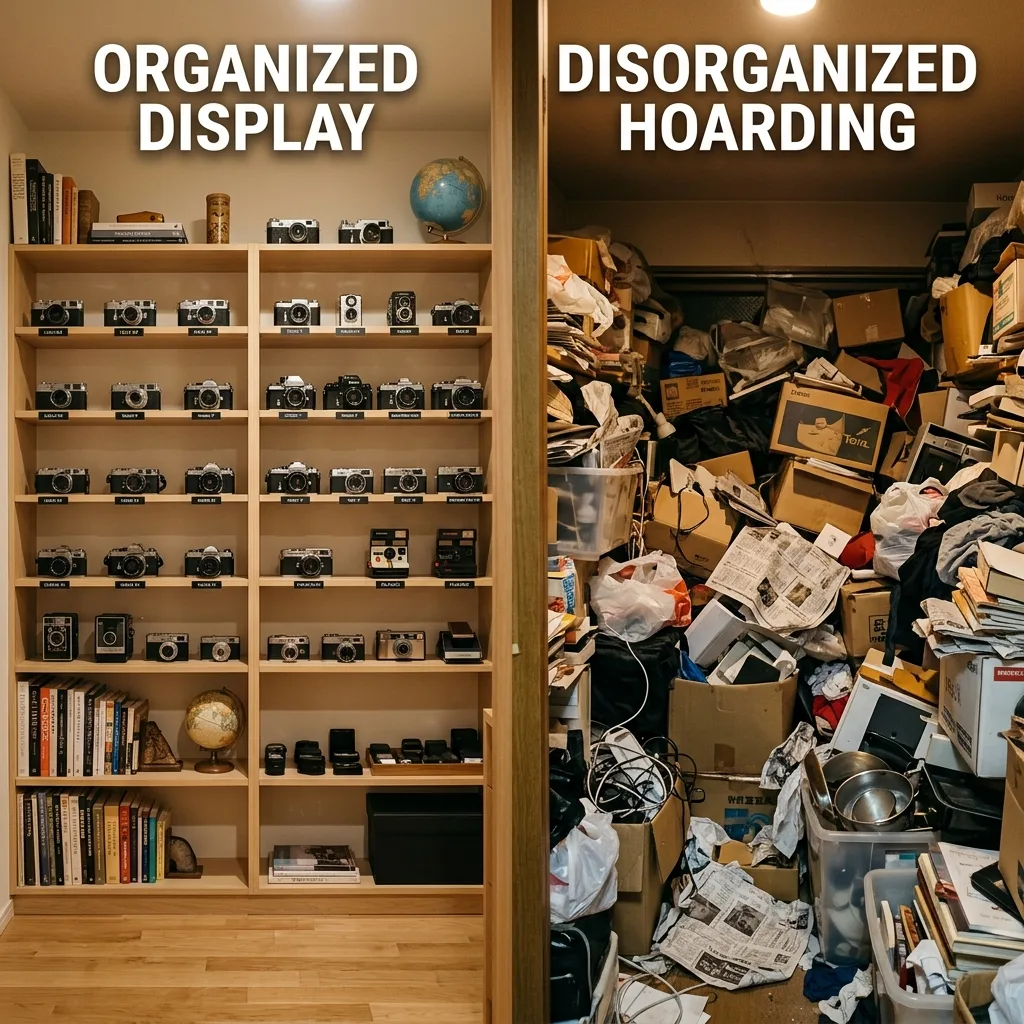
Collectors typically organize their items with care and intention. A stamp collector uses albums and protective sleeves. A coin collector has display cases and cataloging systems. A vintage guitar enthusiast keeps instruments on proper stands or wall mounts. The collection has a structure, and the collector takes pride in how items are maintained and presented.
In hoarding situations, items accumulate without organization. Belongings pile up on surfaces, fill rooms, and eventually overtake living spaces. There is no cataloging system, no display arrangement, and often no clear awareness of exactly what has been acquired. Items may still be in shopping bags, original packaging, or mixed together in undifferentiated piles.
Selectivity and Focus
Collecting involves selectivity. A collector of mid-century modern furniture does not also accumulate old newspapers, empty containers, and broken appliances. Collections have a defined scope, and collectors make deliberate choices about what belongs in their collection and what does not. They research items, compare options, and curate their holdings.
Hoarding, by contrast, tends to be indiscriminate. While some individuals who hoard may have areas of particular accumulation, the behavior typically extends across many categories of items. The difficulty lies not in finding specific things to acquire but in letting go of anything at all. This lack of selectivity is one of the clearest distinguishing features.
Emotional Response
Collectors experience positive emotions related to their collections. They feel pride in displaying items, excitement when finding a rare piece, and satisfaction in the knowledge and expertise they have developed. While collectors can certainly become attached to their items, the emotional relationship is predominantly positive.
For individuals who hoard, the emotional relationship with possessions is more complex and often driven by anxiety. The thought of discarding items triggers intense distress, fear, or grief. Keeping items provides temporary relief from these negative emotions, but the accumulation itself becomes a source of shame, embarrassment, and isolation. The emotional cycle perpetuates itself, with acquisition providing brief comfort that is quickly overshadowed by the consequences of growing clutter.
Impact on Daily Life
Perhaps the most important distinction is functional impact. A collector’s hobby enhances their life. It provides social connections through collector communities, intellectual stimulation through research and learning, and personal satisfaction through the curation of meaningful items. The collection occupies designated space and does not interfere with daily activities.
Hoarding impairs daily functioning. When accumulation prevents someone from using their kitchen to cook, their bed to sleep, or their bathroom for hygiene, the behavior has crossed well beyond collecting. When clutter creates fire hazards, attracts pests, or makes the home unsafe, the impact on quality of life is severe. Relationships suffer as individuals become embarrassed to invite anyone into their home, leading to increasing social isolation.
When Collecting Starts to Become Problematic
The transition from collecting to problematic accumulation does not usually happen overnight. It often develops gradually, and the person involved may not recognize the shift as it occurs. Several warning signs can indicate that a collecting habit is moving in an unhealthy direction.
Loss of Boundaries
When a collection begins to expand beyond its designated space and encroach on living areas, it may be a sign that the behavior is becoming less controlled. A book collection that once filled two bookshelves but now covers the dining table, fills the guest room, and lines the hallways has outgrown its original boundaries.
Difficulty Parting With Items
Collectors regularly sell, trade, or donate items as they refine their collections. If the idea of parting with any item, even duplicates or pieces that no longer fit the collection’s focus, becomes intensely uncomfortable, the attachment may have shifted from appreciation to anxiety-driven retention.
Acquiring Without Purpose
When someone begins acquiring items without a clear reason or plan for where the item will go, the behavior may be moving away from intentional collecting. Buying things simply because they are available, on sale, or might be useful someday reflects a different motivation than building a curated collection.
Social Withdrawal
If someone begins declining invitations, avoiding hosting guests, or becoming defensive when family members comment on the volume of their belongings, these social changes can signal that accumulation has become a source of shame rather than pride.
Financial Strain
While collectors certainly invest money in their hobbies, the spending typically aligns with their means and priorities. When acquisition spending causes financial hardship, leads to unpaid bills, or creates conflict in relationships, it has moved beyond a recreational pursuit.
The Psychology Behind Hoarding Behavior
Hoarding disorder is recognized as a distinct mental health condition in the Diagnostic and Statistical Manual of Mental Disorders. Research has identified several psychological factors that contribute to hoarding behavior, and understanding these factors helps explain why the condition is so much more than simple messiness or laziness.
Information Processing Differences
Studies have shown that individuals with hoarding disorder often process information differently when making decisions about possessions. They may have difficulty categorizing items, making decisions about what to keep, and organizing belongings into logical systems. What appears from the outside as simple disorganization actually reflects genuine cognitive challenges with sorting and decision-making.
Emotional Attachment to Objects
People who hoard frequently form unusually strong emotional bonds with their possessions. Items may serve as extensions of memory, identity, or security. Discarding an object can feel like losing a part of oneself or erasing an important memory. This intense attachment makes decluttering an emotionally painful process rather than simply an organizational task.
Perceived Utility and Waste Avoidance
Many individuals who hoard have a heightened sense of an object’s potential usefulness. They can envision future scenarios where almost any item might be needed, and discarding something that could hypothetically be useful feels wasteful and irresponsible. This reasoning, while logical on its surface, becomes problematic when applied to virtually everything.
Trauma and Loss Connections
Research has found that hoarding behavior often intensifies following significant loss or trauma. The death of a loved one, a divorce, a job loss, or another major life disruption can trigger or worsen accumulation. Possessions may serve as a buffer against feelings of vulnerability and loss, providing a tangible sense of security in an uncertain world.
Seeking Help and Moving Forward
Recognizing that accumulation has become problematic is an important first step, whether that recognition comes from the individual or from concerned family members. The path forward depends on the severity of the situation and the individual’s readiness to make changes.
Professional Assessment
A mental health professional experienced in hoarding disorder can provide a proper assessment and help distinguish between enthusiastic collecting and clinical hoarding. This assessment considers the person’s level of distress, functional impairment, and the degree to which accumulation affects their health and safety.
Therapeutic Approaches
Cognitive behavioral therapy has shown the most consistent evidence of effectiveness for hoarding disorder. This approach helps individuals examine and modify the thought patterns that drive acquisition and retention behaviors. Therapy also builds practical skills for decision-making, organization, and managing the anxiety that accompanies letting go of possessions.
Compassionate Support
Whether someone is dealing with their own accumulation habits or supporting a family member, approaching the situation with compassion rather than judgment makes a significant difference. Hoarding behavior is not a character flaw or a choice. It is a recognized psychological condition that responds to appropriate treatment and support.
Understanding the difference between collecting and hoarding is not about labeling or stigmatizing anyone. It is about recognizing when a behavior that can be perfectly healthy has shifted into territory that causes suffering, and knowing that effective help is available when it does.